By, Karen Lundquist, Association Manager, Impact AMC
Many of the organizations we know and love were introduced to us by a trusted colleague, an educator, or our HR leadership. Today, we have less casual interaction in the workplace, where our watercooler might be as virtual as our meeting. Gatherings of like-minded individuals are less common because our busy lives (digital and IRL) make regular commitments less frequent.
However, countering these challenges is the growing demand for development, mentoring, and peer support as we all make our way through ever-changing career paths. The importance of associations that fill these needs is growing even as the ways we search for these opportunities have changed.
As associations that value connection, taking advantage of new digital search habits can build momentum instead of becoming a barrier.
Algorithms and search technology
As you determine how your association engages in digital search, there are two elements to consider: the algorithm and the method or tool. These two areas tell a story that traces a path from a simple search, like thumbing through the encyclopedia, to our current conversations with our phones, watches, computers, and glasses.
To successfully add new techniques to our communication plans, we need to understand how to tell our stories online in a way that generative and answer-oriented search can respond to.
Search engine optimization (SEO)
SEO is one of the many ways that communications professionals use to connect people searching for their information, product, or service. SEO is website-focused, and its practitioners use search results to craft the images, language, and technology that will draw people from a search result on Google to their web page with relevant details.
SEO is very data-driven. Imagine you are looking for a new car. Whether you type in “red sports car” or “great grocery getter van” you will get very different responses because of the words you chose. Car dealers can analyze those search words to edit their website and make sure their red sports cars and SUVs show up in your search results.
In the early 2020s, we saw the arrival of Answer Engine Optimization or AEO. But, SEO didn’t go away. You still should make sure search engines know about your red cars and vans.
Answer Engine Optimization (AEO)
As our searches changed to asking Siri for a dinner recommendation or what our health symptoms could indicate, search engines focused on quickly getting us to good content that we could trust. This is reflected in influencers and Dr. Google, sources that didn’t rate high on the trust scale a decade ago.
In addition to what we asked, our questions moved beyond the computer screen and outside of traditional search engines. We told our televisions to find a show we liked, asked ChatGPT to share top hotel reviews in New York, and told our car to find the nearest gas station. We saw more artificial intelligence shaping responses and how content was ranked.
Generative Engine Optimization (GEO)
Most recently, artificial intelligence generates comprehensive answers by gathering the details from multiple sources that its system identifies as trustworthy. This current phase is Generative Engine Optimization or GEO. There isn’t a clear bright line separating AEO and GEO in the public’s mind. However, as online search was augmented with artificial intelligence responses, GEO was born from the shift to AI-driven search, whether as part of a traditional search engine like Google or included with ChatGPT's outputs. Most dramatically, instead of simply listing results, AI is shaping a narrative, a conversational answer to our query.
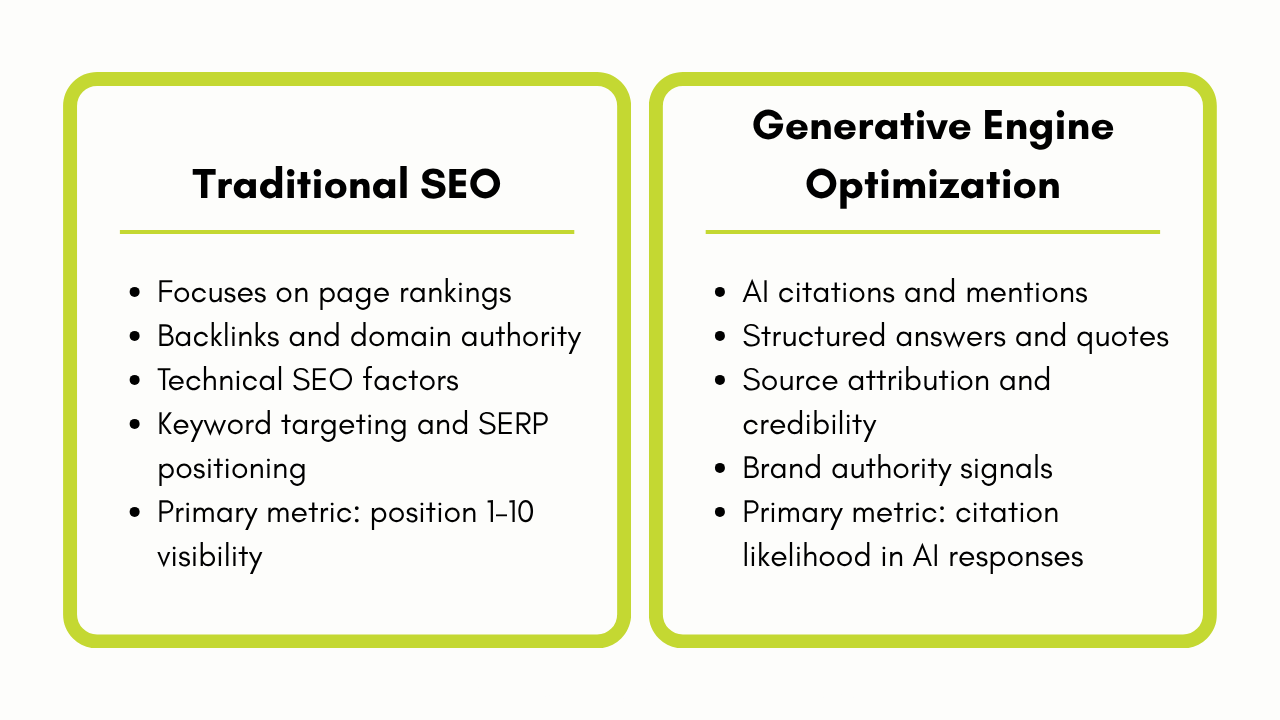
Sourced from WHITEHAT’s “The History of SEO: From 1990 to AI Search in 2026”
Why is GEO important to associations?
Associations want to be referenced as an expert in the answer provided to potential members. Whether it’s Google, ChatGPT, Claude, or any of the many other contenders, being seen as an expert and easily quoted is an important new consideration for reaching our audiences.
All of the AI-supported search is seeking to answer your question, not just provide resources. Their algorithms work by prioritizing experts in the field that add facts and citations to their information.
If a human resources professional asks about AI and hiring, the National Human Resources Association wants to be quoted and referenced. The International Society for Pharmacoepidemiology should be a top expert for those seeking to advance in the field.
Associations have a secret weapon: They are made up of individual experts and organizational expertise. They ARE the experts in their areas, and they can name-drop with the best. Survey results, webinars, education, training, certification – it all speaks of in-depth, trustworthy wisdom.
In addition, nearly every association website talks about networking and connections. Building community is a key value of joining an association, and these connections are not what AI is known for.
Assessing your resources and digitally building on your strengths is an ideal way to navigate this new acronym. Stay tuned for Part Two to learn more about how to accomplish this!
You’re the subject matter experts, we’re the association management experts.
You are the experts in your field, Impact AMC is the collaborative partner who can help propel your organization forward. As a boutique association management company, Impact AMC will bring just the right type of support to boost your visibility, grow your organization, and accomplish your goals.